
It’s time to start working on AEO (Answer Engine Optimization). SEO alone is no longer enough.
“Google doesn’t send me traffic like it used to.”
“How can I show up in ChatGPT?”
I’ve heard both of these from clients—more than once—in the last few months.
And the answer isn’t more SEO.
Today, the winner is not the brand that ranks first on Google. It’s the one that provides the best answer, in the right place, at the right moment—when the user asks the question.
And that’s where AEO comes in: Answer Engine Optimization.
It’s not new—but very few are doing it right.
What is AEO?
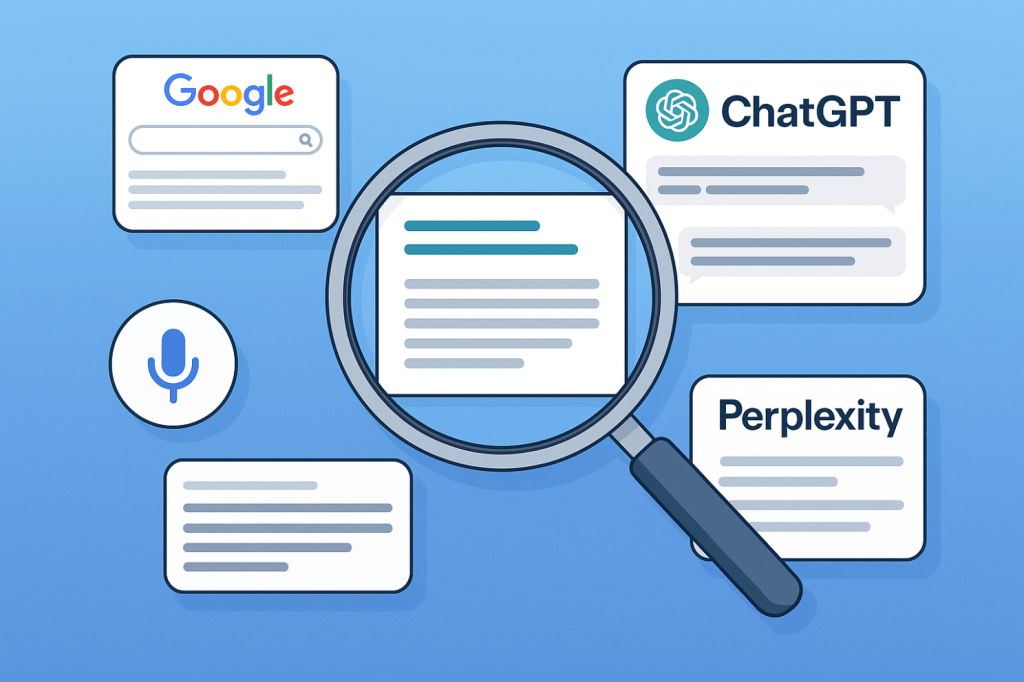
AEO is about optimizing your content so that answer engines like Google, Bing, Siri, Alexa, ChatGPT, Perplexity, and others choose it as a trusted source for specific questions.
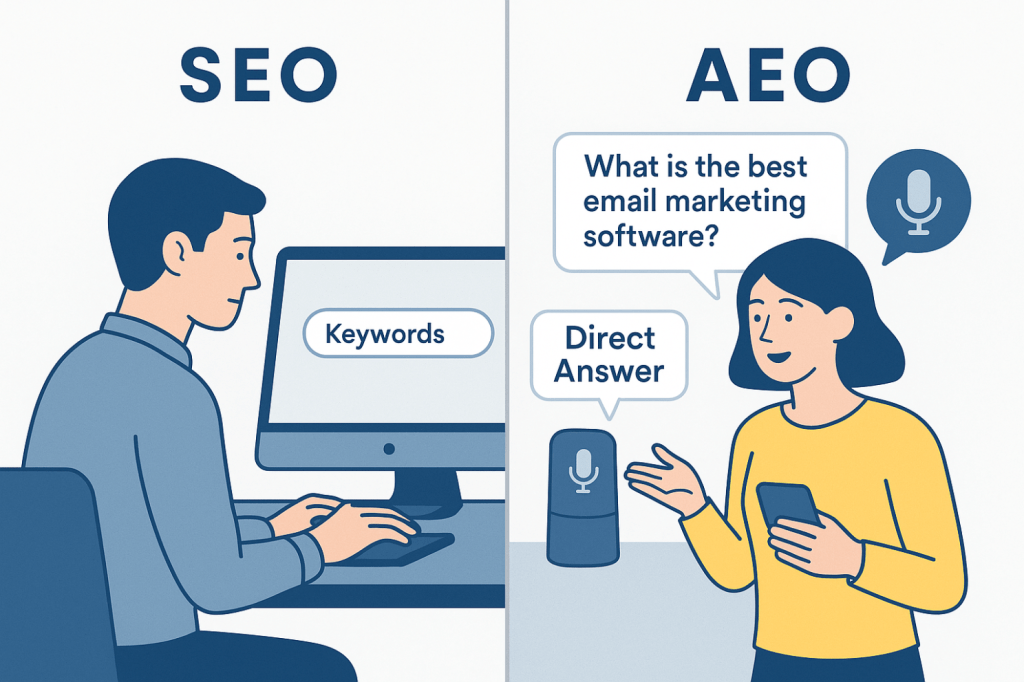
It’s not about creating more content.
It’s about creating answers—answers that are clear, helpful, and extractable by AI.
Answers that live where users actually ask: on their phones, in chats, even out loud.
How to Do AEO Right
1. Map questions, not keywords.
Your user isn’t searching for “best moisturizers 2025.”
They’re asking:
👉 “What moisturizer works for sensitive skin in humid weather?”
👉 “What sunscreen won’t leave my face greasy?”
👉 “What shampoo helps with hair loss?”
That’s real search language. And that’s the kind of content that answers—not just ranks.
Use tools like AnswerThePublic, AlsoAsked, Reddit, or even ChatGPT to find the real questions your audience is asking.
2. Write like an assistant would.
Your answer should appear in the first 2–3 lines.
Short, clear, useful.
You can elaborate later—but first, answer the question.
3. Format content for extraction.
It’s not enough to write a good answer. You need to help both AI and humans find it.
LLM engines like Google and ChatGPT don’t read your full article—they scan it for blocks of content that are clear, direct, and structured.
That’s why formatting matters:
- Use headings (H2, H3) that state the exact question being answered.
- Prefer bullet points, steps, and lists when possible:
“3 ingredients to avoid if you have oily skin”
“How to make ramen at home in under 20 minutes” - Add real FAQs at the end—not made up. Pull from Google’s “People also ask,” user comments, or reviews:
“Can I use this cream during pregnancy?”
“How long does the perfume last on skin?” - Keep paragraphs short. AI won’t extract a 300-word block. The ideal paragraph is 40–60 words, straight to the point.
This helps both SEO and humans. It increases your chances of being featured as a snippet—or cited by AI.

4. Use schema. It’s not technical—it’s strategic.
Schema.org lets you mark up your content as a FAQ, HowTo, etc.
It gives extra context to engines, helping them highlight or even read out loud your content.
How Do You Know It’s Working?
Here’s the truth: AEO is hard to measure.
There’s no magic metric.
Often, there are no clicks to prove success.
But there are signs.
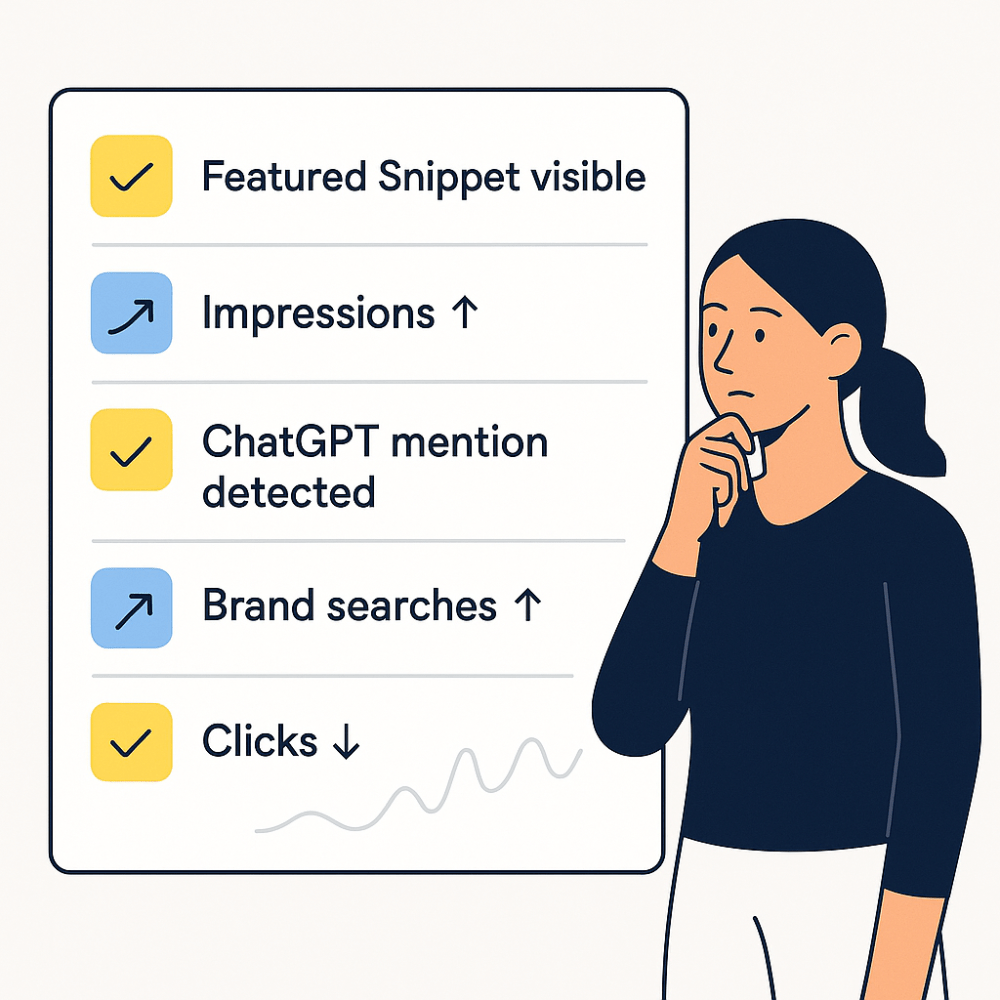
✅ Featured Snippets on Google (Position Zero):
That little box before the first result. If your content shows up there, Google is saying, “This is the best answer I found.” It may not always get clicks, but it builds visibility, trust, and brand recall.
✅ Impressions go up—even if clicks don’t:
Looks bad? Not necessarily. In AEO, it may mean your content is being seen as a valid answer—even if users don’t need to click.
✅ Traffic from emerging platforms:
ChatGPT, Bing Chat, Perplexity… These tools are already quoting and linking to sources. Few are tracking it, but it’s happening.
✅ And the simplest test: ask yourself.
Go to ChatGPT or Bing and ask the questions your users are asking.
Does your content appear?
Does your brand get mentioned?
Or are you being ignored?
AEO doesn’t replace SEO. But it takes it where today’s questions are.
If your organic traffic isn’t behaving like it used to,
Or if someone on your team already asked “how do we appear in ChatGPT?”
Then this is the path forward.
Happy to share what I’m learning along the way. I’ll keep you posted on what’s working.
Hope this was useful.
 Jaime Lopez
Leave a comment